Survival, Suppression, Sprawl: Hukou and China’s Urban Future
It would seem China is a land of extremes.
Every morning, readers across the western world open their newspapers to the Asia section to find two disparate types of headline: one that asserts that China is a country plagued by social unrest, with a faltering economy and weak central party, and another that likens China to a geopolitical juggernaut, economically, diplomatically, and militarily outstripping the U.S. at every turn, with little chance that its Communist Party will be overthrown. Domestically, this contradiction manifests itself within a striking demographic divide: those with hukou and those without.
Taken from the Chinese for “household” and “individual,” the hukou system was established in 1958 during the tenure of Mao Zedong as a way for the Chinese Communist Party (CCP) to control China’s population and labor force migration through a system of household registration tied to place of birth. A government document similar to a passport or visa, hukou classifies a citizen by place of residence and agricultural or non-agricultural status, and although rural residents are legally permitted to migrate for work, they generally cannot obtain full access to urban public services without transferring their hukou registration to their destination city, a process that remains highly restricted in major cities. Migrants living in cities without applicable hukou are not able to get an ID card, register for schooling, get married, open a bank account, or access health insurance.
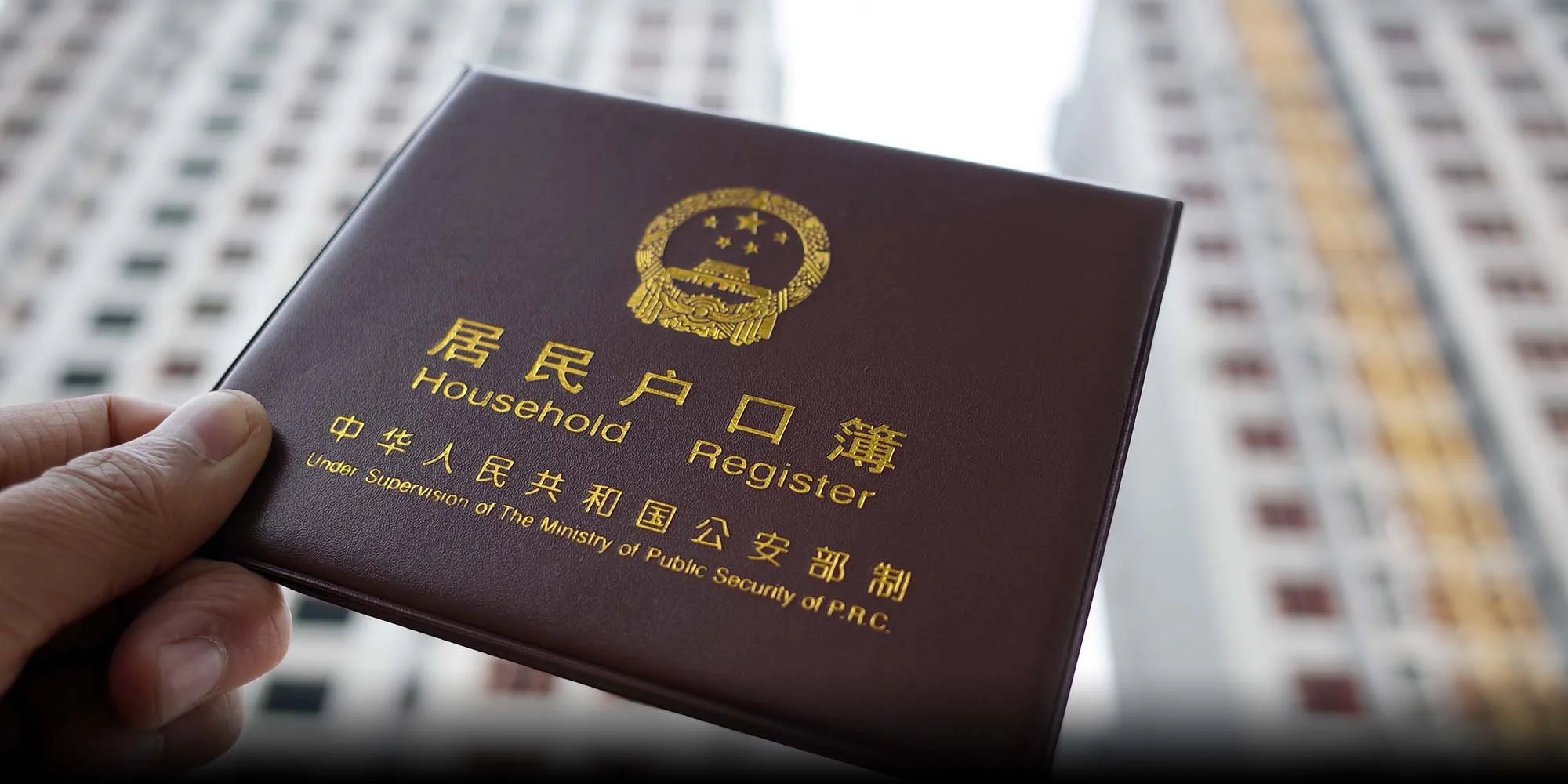
Despite substantial economic reforms since the late 1970s and the relaxation of many migration restrictions, hukou remains a central institution and striking idiosyncrasy of China’s political economy. According to recent statistics, there are roughly ten million more migrant workers that are part of China’s “floating population” who live and work without hukou status than there are citizens of the United States. Today, possession of urban hukou serves as a crucial differentiator between the “haves” and “have-nots” in China, creating what professor Sun Liping of Tsinghua University calls a “cloven society” split between new-money urban elites and “floating populations” of migrant workers denied basic social services. The hukou system is therefore not merely a relic of socialist planning but a modern-day mechanism through which the CCP manages urbanization, fiscal burdens, and political stability, making it an important topic for study.
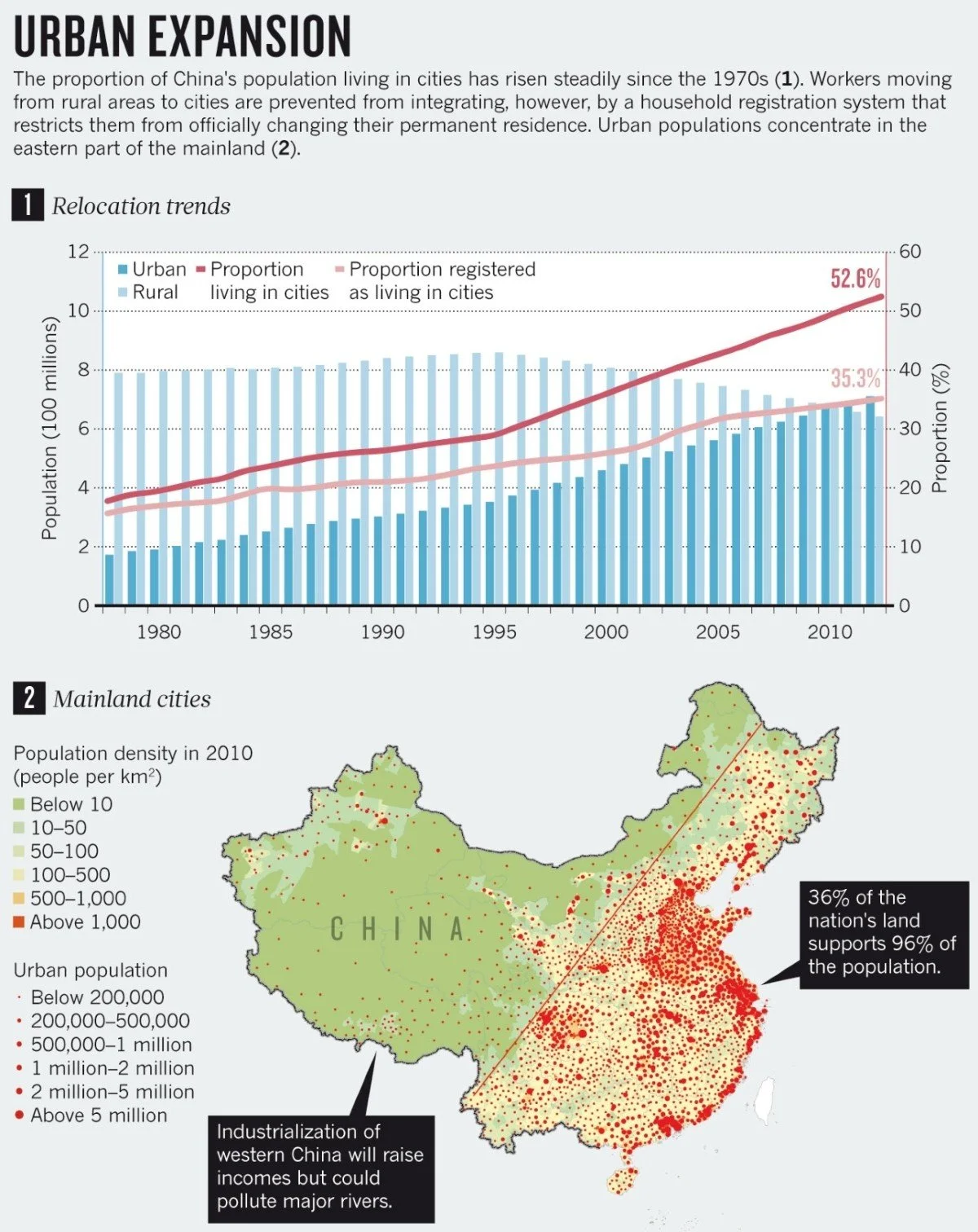
Interestingly, recent waves of reform from 2021-24 eased restrictions on hukou, effectively abolishing restrictions on household registration in cities with under 3 million people. The reversal of such a longstanding policy in the Chinese political landscape deserves much attention, especially considering that reforms have only been implemented in small cities while hukou quotas in China’s biggest metropolises remain firmly in place. This discrepancy thus motivates the paper’s main research question: why has the Chinese Communist Party conducted hukou reform only in smaller cities while remaining strict in China’s most populous urban centers? Understanding the answer to this question will help scholars and policymakers alike better grasp the strategic logic of the CCP in implementing selective hukou reform and come to understand China’s economic and political future as it casts off longstanding policies in an effort to restructure its economy.
Central to the logic of the Communist Party’s uneven reforms lies the phenomenon of urban bias, an economic pattern of state policy in which governments systematically favor nascent urban populations over rural ones through preferential policies often financed through the extraction of resources from the countryside. In many developing countries, such a bias emerges because urban residents are geographically concentrated and therefore better able to organize politically, making them a greater threat to regime stability. This typically leads authoritarian governments to frequently redistribute resources toward big cities in order to reduce the likelihood of collective action and unrest in politically sensitive urban centers. However, the hukou system represents an atypical example of an attempt to counteract the migration incentives created by urban bias.
The key motivation behind inconsistent geographic application of hukou reform is the Chinese Communist Party’s strategic fight against the migration incentives of urban bias in the face of rapid economic development. By restricting permanent urban residence and limiting migrants’ access to welfare benefits, the hukou system deliberately slows the movement of rural populations into major metropolitan centers, safeguarding cities from budgetary overload, protecting the material interests of urban residents from diluted social benefits and cost-of-living increases, and defending against the pernicious political effects of urbanization. This crucial function helps explain why hukou reform has been geographically uneven: smaller cities, where new migrants and fiscal expansion are desirable, not burdensome, receive relaxed hukou restrictions to attract migrants and stimulate growth. Conversely, China’s biggest cities, such as Shanghai, Tianjin, Beijing, and Chongqing, maintain strict hukou controls to prevent a potentially politically unsustainable level of urbanization.
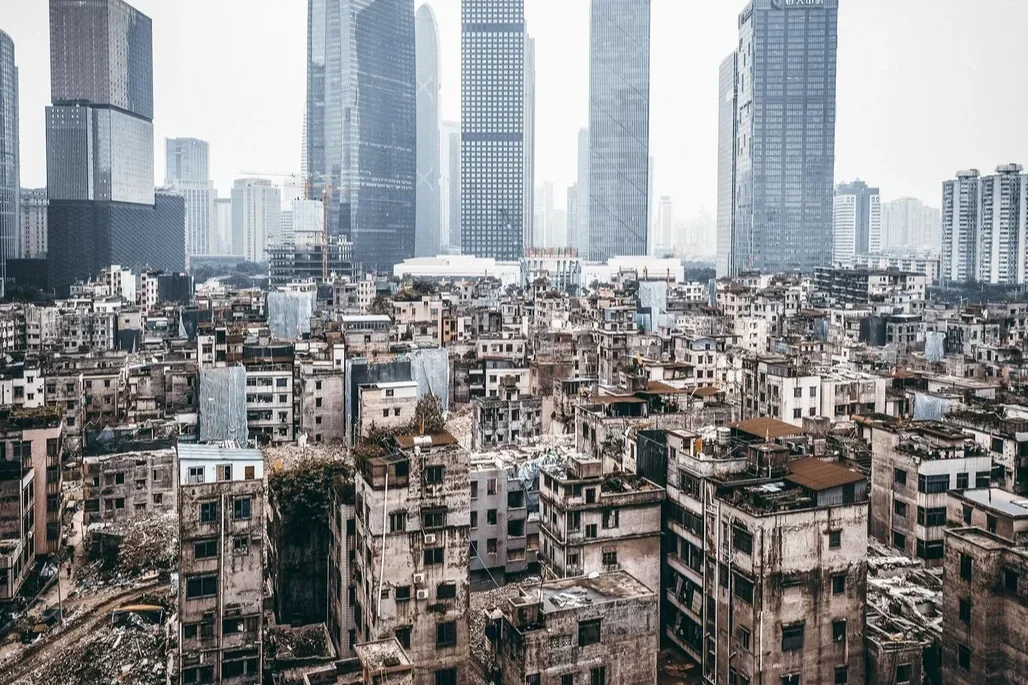
An “urban village,” characterized by migrant inhabitants, cramped spaces, and poor sanitation, in the foreground of the Guangzhou skyline.
The existing scholarship on Chinese hukou reform sits at the intersection of three related yet distinct literatures: the institutional ecosystem of the hukou policy, studies of China’s political economy and fiscal governance, and theoretical works on urbanization and regime stability. While these works discuss different dimensions of hukou, they do not integrate their insights to explain the motives of geographically uneven hukou reform across Chinese cities.
One strand of research focuses on the origins and evolution of the hukou system and its lasting effects on China’s economic trajectory. Work by Kam Wing Chan and others documents how hukou emerged in the Maoist era as a mechanism of population control, designed to restrict rural-to-urban migration and maintain a stable agricultural workforce. By providing hukou for housing, employment, and social services only in one’s place of registration, the system guaranteed that China would not grow at a rate faster than it could agriculturally sustain and limited permanent urban resettlement.
The second major thread of scholarship focuses on the severe constraints of Chinese municipal finance to explain local government behavior. Ling Wu contends that China’s fiscal decentralization is the very mechanism that caused local governments to not offer equitable social provisions. Because local governments bear almost the entire financial burden of welfare for their residents, the CCP deliberately employs strict hukou policies to exclude migrants and reduce fiscal strain on overburdened cities. Christine Wong expands upon this theory, demonstrating that under China's decentralized structure, municipal governments are saddled with massive expenditure mandates but have been stripped of sufficient formal tax revenue. Squeezed by these mandates, cities rely heavily on extrabudgetary revenue such as land transfers and borrowing to sustain growth. Consequently, large cities view the mass integration of migrants not as a labor boon, but as an immediate threat to municipal solvency.
The third camp of literature discusses urbanization within the context of authoritarian regime survival. Jeremy Wallace argues that authoritarian regimes face particular dangers from urban concentration because large cities facilitate collective action and increase the likelihood of protest. Relatedly, Mark Beissinger contends that urban spaces serve as the perfect canvases for new-age, modern revolutions, which rely on mass assembly in dense cities rather than rural armed struggles to topple regimes. As Gilboy and Heginbotham identify, to avoid the crime, slums, and instability associated with rapid urbanization, a phenomenon characterized within the Party as “Latin Americanization,” the CCP has utilized migration restrictions to deliberately slow the pace of urbanization to manageable levels and slow the flow of migrants into politically sensitive megacities.
While the existing literature exhaustively documents the fiscal needs of local governments (Wong, Wu) and the regime survival tactics employed by the CCP to manage urbanization (Wallace, Beissinger, Gilboy & Heginbotham), there is a distinct lack of synthesis between these fiscal and political threads to explain geographic divergence in hukou reform. Most studies either look broadly at the national hukou system's evolution or focus narrowly on rural resilience or local finance, without connecting the fiscal reality of municipal governments to the CCP's overarching strategy of regime longevity. This article thus takes varying theoretical threads from past swathes of existing literature and intertwines them to form a novel thesis behind the CCP’s strategic logic motivating disparate hukou reform between China’s smallest and largest cities, a thesis which provides important insight into the strategic logic of the CCP and the future of Chinese urbanization.
As previously mentioned, the CCP applies inconsistent hukou reform between small and large cities as a way to mitigate various effects of urban bias on the regime. Since 1980, China’s economy and urban landscape has shifted at levels never before seen in human history. Roughly a third of all Chinese citizens—a number dwarfing the population of the United States— immigrated into cities between 1980 and 2010, placing extreme pressure on the Communist Party to finance infrastructure and public services for its increasingly urban population. As political scientist Jeremy Wallace contends, urbanization has been proven to substantially increase the likelihood of regime collapse in non-democracies—especially when that urbanization is unplanned and in a developing country—due to urban bias. This phenomenon motivates the CCP’s fear of “Latin-Americanization” (“La Mei Hua”): widespread crime, slums, and predominately male urban migrant populations that plague regimes of Latin America with permanent political instability. Urban bias affects developing nations in three key ways, each of which selective hukou reform aims to address: budgetary overload in major cities, overburdened public services, and increased likelihood of revolution through lowered costs of collective action in urban settings. It is important to note that such problems arise not merely with the presence of urbanization, but with the trajectory and shape of urbanization. As will be shown, the CCP thus uses geographically-discriminant hukou reform as a policy instrument used to shape China’s demographic and macroeconomic trajectory to address these three negative side effects of urban bias.
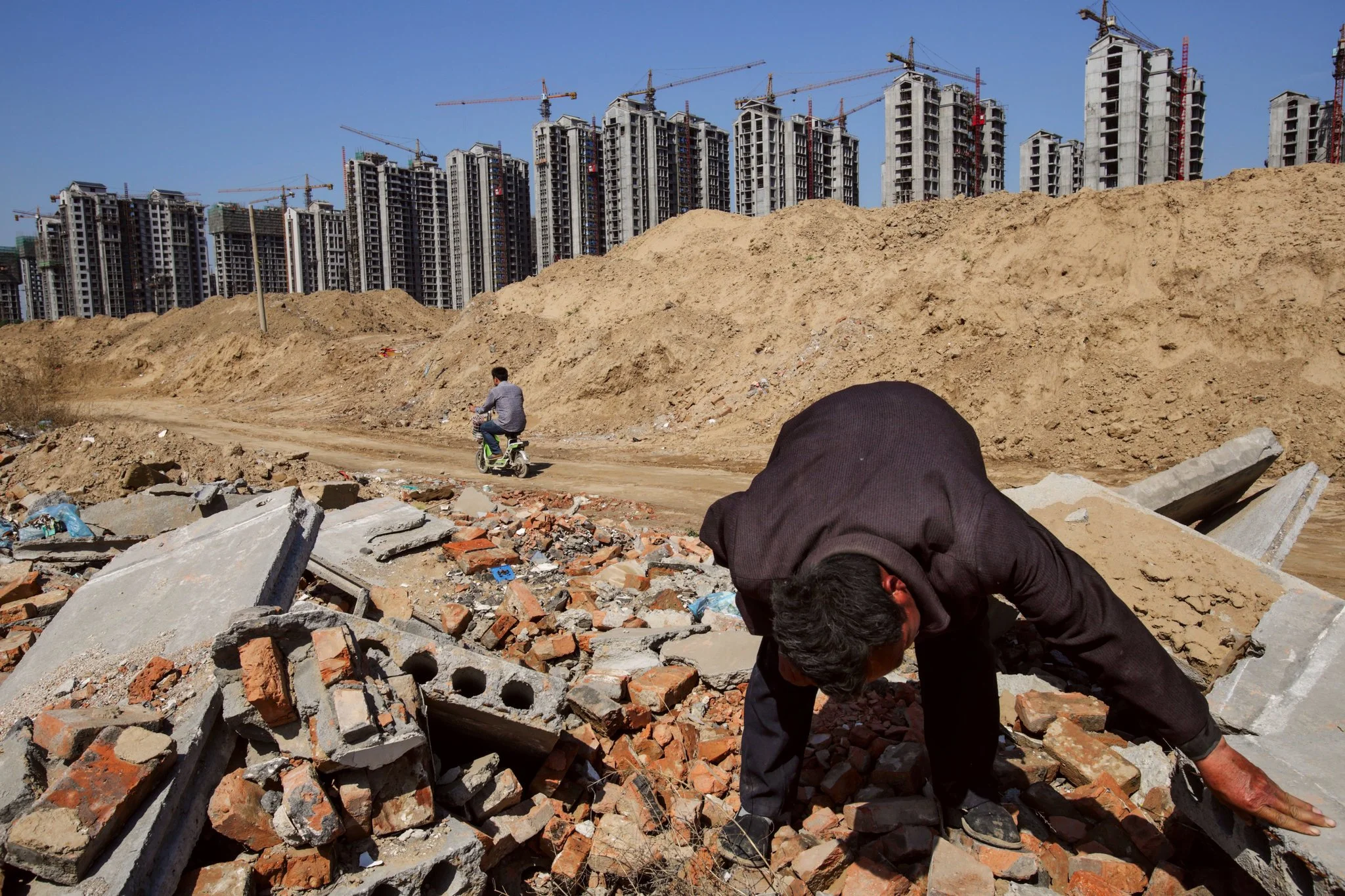
The first primary motivator of geographically-discriminant hukou reform is China’s decentralized fiscal structure, which forces municipalities to bear the cost of their welfare burdens themselves and makes additional citizens costly. From a budgetary perspective, China is one of the world’s most decentralized countries. The Chinese administrative structure divides the country into 5 strata, with a local government’s budget solely determined by the rung of the administrative ladder it inhabits. The central government, run by the Chinese Communist Party, stands as the highest tier. Below it lie roughly 44,000 subnational governments (SNGs) and urban local governments (ULGs) in the second echelon. SNGs are divided into multiple levels, with the top level of SNG comprising twenty-two provinces and five autonomous regions as well as 4 provincial-level cities: Beijing, Shanghai, Tianjin, and Chongqing. Below SNGs and ULGs lie prefectural units in the third rung, counties and county-level cities in the fourth, and towns, townships, and villages in the lowest tier. China has roughly 27,000 ULGs, of which only 31 have prefectural rank and are considered larger and more prosperous. The overwhelming majority of ULGs, therefore, are smaller cities which account for less of China’s population and fiscal activity. While China’s central government handles expenses relating to national security, defense, and macroeconomic policy, its local governments bear primary responsibility—over 90% of the expenditure burden—for financing many public services, including free education, basic healthcare, housing programs, and social security systems. This structure uniquely places financial burden on Chinese ULGs, which makes inhabitants as costly as they are necessary.
As a result, this decentralized fiscal arrangement creates major incentives for big municipal governments to manage the costs associated with urban population growth. Migrant workers, who, in the case of the Chinese labor market, typically seek to migrate to big cities from rural countryside villages, metamorphose in the eyes of city budget planners from potential harbingers of economic growth to new fiscal burdens the city’s budget must internalize. For major metropolitan areas already facing high welfare expenditures and infrastructure demands, expanding hukou access to large numbers of migrants could thus impose substantial financial burdens. It is precisely China’s decentralized fiscal system that is the engine that drives unequal application of hukou reform: since the administrative hierarchy places the burden of welfare funding squarely on local governments rather than the central government, a city's administrative rank and wealth directly dictates its hukou policies. The 31 wealthiest municipalities wield strict hukou policies as a measure designed to protect their budgets and appease existing residents, whereas the tens of thousands of smaller, lower-tier ULGs are permitted to reform hukou to stimulate local economic growth. Instead of reshuffling its national budgetary framework, the CCP uses hukou as a crucial economic firewall to protect its cities from the fiscal overstretching endemic to urban bias.
Aside from fiscal reasons, the CCP also wields hukou as a mechanism of regime protection. By withholding hukou reform in China’s largest cities, the CCP protects the key interests of registered urban residents and mitigates the potentially disastrous political effects of overpopulation. Although the CCP is not a democratic body, the threat of rebellion looms large over the party, with memories of Tiananmen Square and the democracy movement lingering in the rearview mirror as reminders of how urban protest movements can threaten regime survival. The CCP recognizes that the ultimate pacifier of its citizens is tangible economic results: factors like inflation, corruption, and a stagnating macroeconomic outlook could hurt popular opinion of today’s Party, just as they did in 1989. After all, it is very hard for the Party to make enemies when it delivers a cheaper cost of living, higher quality of life, and improved global standing to its most politically influential citizenry.
Urban residents in major cities, a key base of the CCP’s popular support, enjoy privileged access to public services, educational opportunities, and housing markets through their local hukou status. Expanding hukou access to migrants would intensify competition for these benefits and lead to overcrowded schools, strained healthcare systems, and rising housing demand, which would not only harm cities’ fiscal capacity, but would, most importantly, generate dissatisfaction among existing urban residents. By maintaining restrictions on hukou in major cities, the Chinese Communist Party can preserve the distributive advantages enjoyed by this politically important urban population, helping to sustain social stability in the country’s most economically significant municipalities like Shanghai, Chongqing, or Beijing while promoting relaxed hukou restrictions in small- and mid-tier cities. Therefore, the CCP’s unequal implementation of Hukou between major cities and their smaller counterparts should be understood as a strategic method of demographic control and elite protection in the face of migration incentives caused by urban bias.
Relatedly, the CCP keeps hukou unreformed in its biggest cities as opposed to smaller ones as a way to ensure that they do not become potential revolutionary breeding grounds. Aside from serving as centers of overpopulation or major financial strains, large megacities also lower the costs of collective action. Dense populations, shared urban spaces, and proximity to government institutions make it easier for dissatisfied citizens to organize protests and mobilize politically.
These factors all helped catalyze the Tiananmen square protests in 1989, a fact of which the CCP is intimately aware. Indeed, aside from sheer numbers, cities endow rebel movements with urban spaces like plazas, squares, and monuments, which provide the symbolism and mass appeal that successful revolutionary movements need to thrive (with Tiananmen, again, serving as a crucial precedent of this phenomenon). By easing migrant quotas in only smaller cities, China uses unequal hukou reform as a tool of political control, protecting its major cities from the pernicious effects of urban bias that create potential for “mass incidents” to occur.
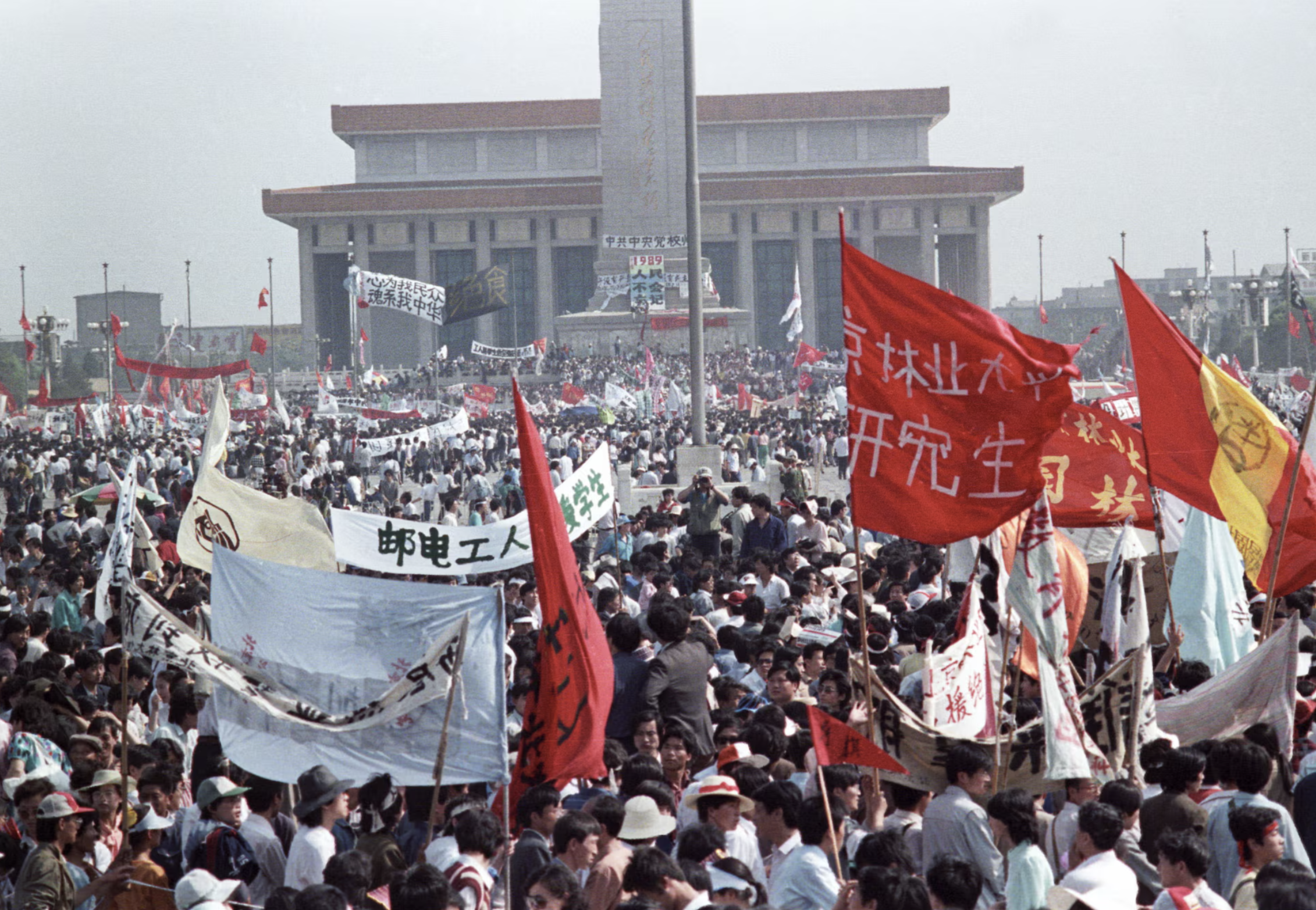
Importantly, while hukou—and its selective reform at the hands of the CCP—directly functions as a tool to mitigate the destabilizing problems of urban bias, the system itself has also historically contributed to the selfsame persistence of the urban bias it is intended to address. By granting urban residents privileged access to welfare benefits, employment opportunities, and subsidized public goods, hukou prevented hyper-speed urbanization during China’s development, yet ultimately institutionalized a hierarchy between urban and rural citizens that favored urbanites and promoted urban bias. These policies designed to manage the political risks of urban bias themselves constitute a “Faustian bargain,” in which short-term stability gained through migration restrictions may ultimately exacerbate the very structural inequalities and urban-rural schisms they are intended to mediate. In this sense, the institution of hukou simultaneously generates and regulates urban bias, preserving the advantages of urban citizenship while also allowing the central government to carefully control the pace and geography of migration. The CCP’s selective reform of hukou policies therefore reflects not an effort to eliminate urban bias altogether, but rather a strategy to sustainably pace its development in a rapidly urbanizing economy.
China’s uneven approach to hukou reform reflects a deliberate political strategy designed to alleviate the effects of urban bias rather than simply an incomplete administrative reform. While many scholars have examined hukou primarily as solely a migration control institution, a source of social inequality, or an accelerant of the urban-rural divide, this geographic reform pattern is best understood through the lens of urban bias and authoritarian regime durability. China’s unprecedented urbanization has created powerful migration incentives that threaten to overwhelm municipal finances, strain public services, and concentrate large populations in politically sensitive urban centers.
By selectively relaxing hukou restrictions in smaller cities while maintaining strict controls in major metropolitan areas, the Chinese Communist Party is able to redirect migration flows away from politically volatile megacities, all while creating economic growth in its second cities. In this way, The Chinese Communist Party thus uses hukou reform like a socio-economic spigot that can be turned on and off to control the flow of urbanization and its associated political risks. This strategy allows China to benefit from urban-driven economic development while attempting to avoid the fiscal crises, social fragmentation, and political instability associated with what party cadres fear as “Latin-Americanization.”
However, the persistence of certain hukou restrictions also mires China in a Faustian bargain that reinforces structural inequalities between rural migrants and urban residents as it actively solves them. As China continues to urbanize and confront slowing economic growth, the long-term sustainability of this equilibrium, and the political consequences of maintaining such a disparity, remain to be seen.
Bibliography
Beissinger, Mark R. The Revolutionary City: Urbanization and the Global Transformation of Rebellion. Princeton: Princeton University Press, 2022.
Chan, Kam Wing. “The Chinese Hukou System at 50.” Eurasian Geography and Economics 50, no. 2 (2009): 197–221.
Chan, Kam Wing, and Will Buckingham. “Is China Abolishing the Hukou System?” The China Quarterly 195 (2008): 582–606.
Chan, Kam Wing, and Ying Hu. “Urbanization in China in the 1990s: New Definition, Different Series, and Revised Trends.” The China Review 3, no. 2 (2003): 49–71.
Gilboy, George J., and Eric Heginbotham. “The Latin Americanization of China?” Current History 103, no. 674 (September 2004): 256–61.
Liu, Jiao, Kezhen Wei, and Qinghong Shuai. “Impact of the New Round of Hukou System Reforms on Rural Household Development Resilience in China.” Scientific Reports 15 (2025): 17098.
Nathan, Andrew J. “The Consequences of Tiananmen.” ResetDOC, June 3, 2009. https://www.resetdoc.org/story/the-consequences-of-tiananmen/.
National Bureau of Statistics of China. “Main Data of the Seventh National Population Census.” Press release, May 10, 2021. https://www.stats.gov.cn/english/PressRelease/202105/t20210510_1817185.html.
National Development and Reform Commission. “Notice on Issuing the ‘Key Tasks for New Urbanization and Urban-Rural Integration Development in 2022.’” March 17, 2022. https://www.ndrc.gov.cn/xwdt/tzgg/202203/t20220317_1319456.html.
South China Morning Post. “On China: Hukou System.” Video. YouTube. April 25, 2018. https://www.youtube.com/watch?v=re8MN2gbFJA.
Trishala S. “Hukou System in China.” ORCASIA. August 8, 2023. https://orcasia.org/hukou-system-in-china.
Wallace, Jeremy. “Cities and Stability: Directing Urbanization, Defining Unrest, and Distributing Transfers in China.” Unpublished manuscript, Stanford University, 2007.
Wallace, Jeremy. “Cities, Redistribution, and Authoritarian Regime Survival.” The Journal of Politics 75, no. 3 (July 2013): 632–45.
Wong, Christine P. “Paying for Urbanization in China: Challenges of Municipal Finance in the Twenty-First Century.” In Financing Metropolitan Governments in Developing Countries, edited by Roy W. Bahl, Johannes F. Linn, and Deborah L. Wetzel, 273–308. Cambridge, MA: Lincoln Institute of Land Policy, 2013.
Wu, Ling. “Decentralization and Hukou Reforms in China.” Policy and Society 32, no. 1 (2013): 33–42.